

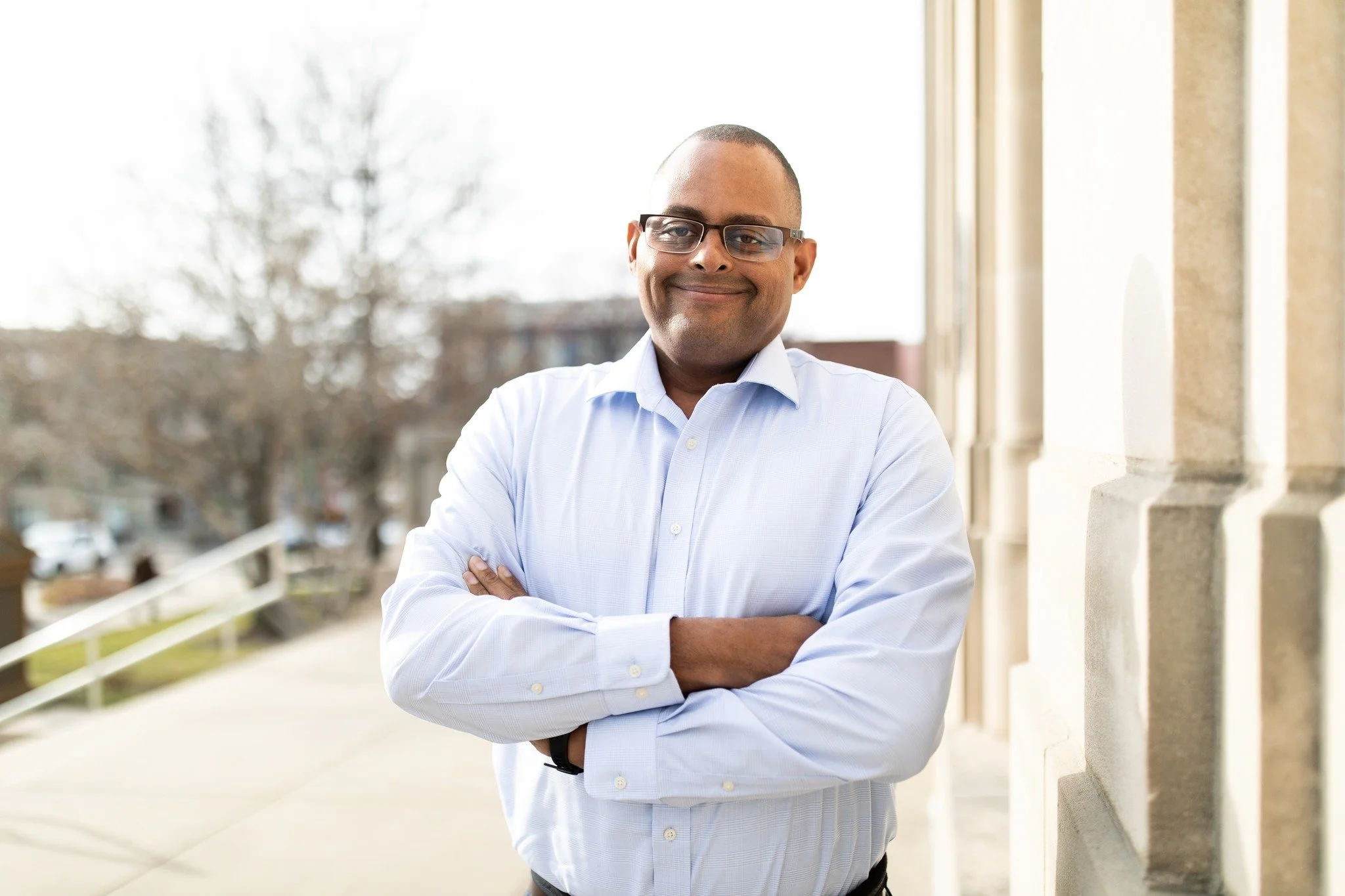
Platte County’s new Sheriff, Erik Holland, has been committed to law enforcement throughout his adult life, and he considers himself to be “extremely blessed” to take on the role of sheriff.
He began his career in Platte County law enforcement in 1999.
He believes the Platte County Sheriff’s Office is a great organization filled with men and women who are not only dedicated to enforcing the law but who truly care about serving the community and making Platte County better.
After his first five to seven years in law enforcement, Holland hit a burnout point, and he decided to go to law school.
“I stayed with the Sheriff’s Office as a volunteer while I was in law school and while working as an attorney,” Holland said. “I kept encountering cases and jobs that were tied to law enforcement in some way and felt like the Lord was pointing me back to law enforcement.”
When an opportunity to return to the Sheriff’s Office presented itself in 2008, he decided to go back full-time and worked as both a deputy sheriff and as the sheriff’s legal counsel.
“Law enforcement was actually my career before and after college,” Holland said.”I completed my Bachelor’s in Public Administration from Park University while I was working for the Platte County Sheriff’s Office.”
His many roles in law enforcement also include serving as an adjunct professor for Park University since 2019. He works with the Criminal Justice department and has taught a variety of criminal justice courses over the years. Most recently he has taught the Rules of Evidence course and the Introduction to Law Enforcement course.
He also serves as chairman of the Law Enforcement Liability Committee of Midwest Public Risk, which is a risk pool for public entities in the states of Missouri and Kansas.
“It effectively serves as an insurance company for the entities that are members of the pool,” Holland said. “The Law Enforcement Liability Committee consisted of law enforcement leaders from the various member entities of MPR. We would review claim data and come up with training and programs aimed at reducing or mitigating risks associated with law enforcement. During my time with the committee, MPR brought in driver training, Sunshine Law training, hosted discussion panels on drones, acquired a portal use of force simulator for agencies who couldn’t afford their own simulator and made a law enforcement policy writing platform available to its members.”
After being involved in a wide range of law enforcement experiences, which include patrol, investigations and tactical operations, Holland believes that each has its own unique challenges, and he has enjoyed working on all of the assignments he has had.
“I wouldn’t say that one was more interesting than another because they were all different and unique. I spent the most time as a deputy assigned to our Investigations Division. My assignment as a detective probably required the most familiarization with numerous aspects of law enforcement because of the variety of case types that a detective could be assigned. It also required the most diversified training.”
His experience in jail operations, court security operations and civil process have all helped him in gaining law enforcement expertise.
“These operational areas are some of the core statutory responsibilities of a Sheriff’s Office and they are unique to Sheriff’s Offices,” Holland said. “While all areas of law enforcement are concerned with the rights of citizens, these areas involve the rights of citizens in ways that most law enforcement officers don’t deal with on a regular basis. These assignments really helped highlight the role we serve in safeguarding the rights of citizens. They also help train you in resolving conflicts and in talking with people. Those assignments provided me with skills that were extremely beneficial in my assignments on patrol and in investigations.”
Serving the citizens of Platte County and the men and women of the Sheriff’s Office is his top priority, and Holland is still involved in training law enforcement officers. He currently teaches Constitutional Law in the basic law enforcement academy and he teaches at conferences for the Missouri Sheriffs’ Association. “I find teaching to be very rewarding and it helps me to stay apprised of issues the law enforcement officers are encountering,” Holland said.
In 2015, Holland graduated from the FBI National Academy, which is a 10-week training program for local law enforcement executives, and is different from the training program FBI agents go through.
“At one point in my career, I considered applying for the FBI and discussed it with Sheriff Richard Anderson, who served with the FBI before he became Platte County Sheriff,” Holland said. “Ultimately, I decided that I wanted to stay in local law enforcement and never applied.”
As a SWAT Team Commander and with experience on the Crisis Negotiations Team, Holland believes that tactical operations can be one of the most crucial areas of law enforcement.
“They can be dangerous for all involved and take a considerable amount of planning and resources,” Holland said. “The community expects us to keep the community safe and to resolve these situations in an appropriate manner. It is one of the areas of law enforcement that has a profound impact on the public’s trust in us. The SWAT Team and the Crisis Negotiations Team must work hand-in-hand to try to resolve the situations that rise beyond traditional law enforcement resources. My time with both of these teams has not only given me training in a variety of tactics and strategies but gives me an appreciation for what these men and women go through during these operations and helps in leading these operations and working with our leadership team to prepare these units for the variety of situations they may be called to address.”
Challenges present themselves regularly in this line of work, and as a law enforcement officer, Holland said they encounter people during some of the worst moments of their lives.
“There are a number of cases where you get invested in trying to provide the victims and their families with justice while also making sure that everything is done in a correct manner so that you can provide the prosecutor with the best case possible,” Holland said.
While prosecutors must be able to prove guilt beyond a reasonable doubt, it is law enforcement’s responsibility to thoroughly investigate all crimes, and if possible, provide the prosecutors with the evidence they will need to meet that burden.
“You also have incidents that are not criminal in nature, such as natural disasters, that take every fiber of your being, just so you can help those that are in need,” Holland said. “There have been cases/incidents where we would go days without seeing our families. There have even been cases/incidents where we would sleep at the Sheriff’s Office and go right back to work. The challenges a person faces as a law enforcement executive not only include the types of cases/incidents I just described but also involve making sure that you are there to meet the needs of the men and women of the agency.”
One of Holland’s primary responsibilities is ensuring that the men and women of the Sheriff’s Office have an environment that supports them in doing their work, day in and day out.
“Ensuring that they have the tools, training and resources that they need and guiding the agency in a way to meet the needs of our community takes a lot of dedication and effort,” Holland said. “This responsibility isn’t just borne by the Sheriff, but by every supervisor in the Sheriff’s Office.”
As Platte County continues to grow, new challenges are presented that include increases in criminal activity. Ensuring that the Sheriff’s Office is well positioned to meet the needs of the growing, changing community is one of Holland’s top priorities.
“That includes keeping our staffing at a level to meet the law enforcement needs of the community,” Holland said. “Technology also plays an important role in keeping the Sheriff’s Office effective in achieving our missions. We are constantly looking at ways to make our operations more efficient and to better utilize information in safeguarding our community. This also impacts our ability to be transparent with our community.”
He also believes that supporting, and working with other law enforcement agencies is another key component of achieving effective law enforcement in Platte County.
“Law enforcement in the Kansas City Metro area is known for working well together, which isn’t the case in a lot of other areas. We are working on furthering those partnerships and sharing information and resources with our partner agencies.”
Since no single law enforcement agency can effectively do its job alone, Holland said the sharing of resources with other agencies not only makes law enforcement more effective but it also reduces the cost across the community.
“The Sheriff’s Office is in a great position to work with other agencies in our community to share resources, so there isn’t unnecessary duplication of resources. Community engagement is also a big part of community safety. This not only involves having a good relationship with the community but sharing information with the community that educates them on the challenges facing our communities and ways they can improve their own safety and the safety of the community. We also need to meet the community where they are. I am lucky to take the reigns of an agency that was already working to improve its presence at community events and engage more heavily with modern technologies. Continuing to enhance our digital presence and engaging with the community in aspects of everyday life are an important part of serving the community.”
While Holland is the first African-American sheriff in Platte County, he said while the historical significance isn’t lost on him, it is not something he focuses on. “My grandmother is 100 years old, and my parents are in their 80s. I can’t begin to express what it meant to have them present when I took the oath of office. Discussions that I’ve had with them about experiences they’ve had with law enforcement earlier in their lives has definitely had an impact in how I view my responsibilities to the public and have helped me provide more meaningful training to law enforcement officers.”
Holland said his family has helped instill in him the importance of protecting the rights of all citizens and building meaningful relationships based on trust with the community.
“This is one of the things that motivates me to be a good role model for the young men and women entering the profession or who are looking at law enforcement as a career. Probably more than any other public service profession, we are charged with defending the Constitutional rights of the public we serve and are a part of helping the public feel at peace in their community.”
For young people who are considering a career in law enforcement, Holland believes that this line of work is a calling, and the public’s trust is at the core of his profession. He encourages young people to not only live a life that is deserving of that trust, but to become involved in their community.
“I would also encourage young people to become grounded in their faith and their support networks,” Holland said. “While there are countless rewarding and sometimes exciting times in law enforcement, there are also challenging times. Having a well-grounded support network and being grounded in my faith have been essential for me when faced with the challenges that I have faced in my career. There are also a number of jobs in law enforcement agencies that a person can do without being a certified law enforcement officer, some of which you can enter into immediately after graduating high school. Careers like being a dispatcher, a jailer, or working in the office can be rewarding careers in themselves and they can help a young person who wants to be a law enforcement officer develop experience that will be beneficial throughout their career.”
The greatest rewards in Holland’s many years in law enforcement center around the fact that this career is one where law enforcement agents truly have an impact in the lives of others.
“Sometimes you don’t realize the extent of the impact you have at the moment,” Holland said. “Some of the greatest rewards I have had in my career have come from learning about the impact we have had in the lives of people. I have had the victims of crimes tell me how the work we did on a case helped them move forward. I have had defendants tell me about how we helped them turn their lives around and take a different path. I have seen deputies inspire youth to go into service-based professions. These are the greatest rewards that I have received from my career in law enforcement.”