

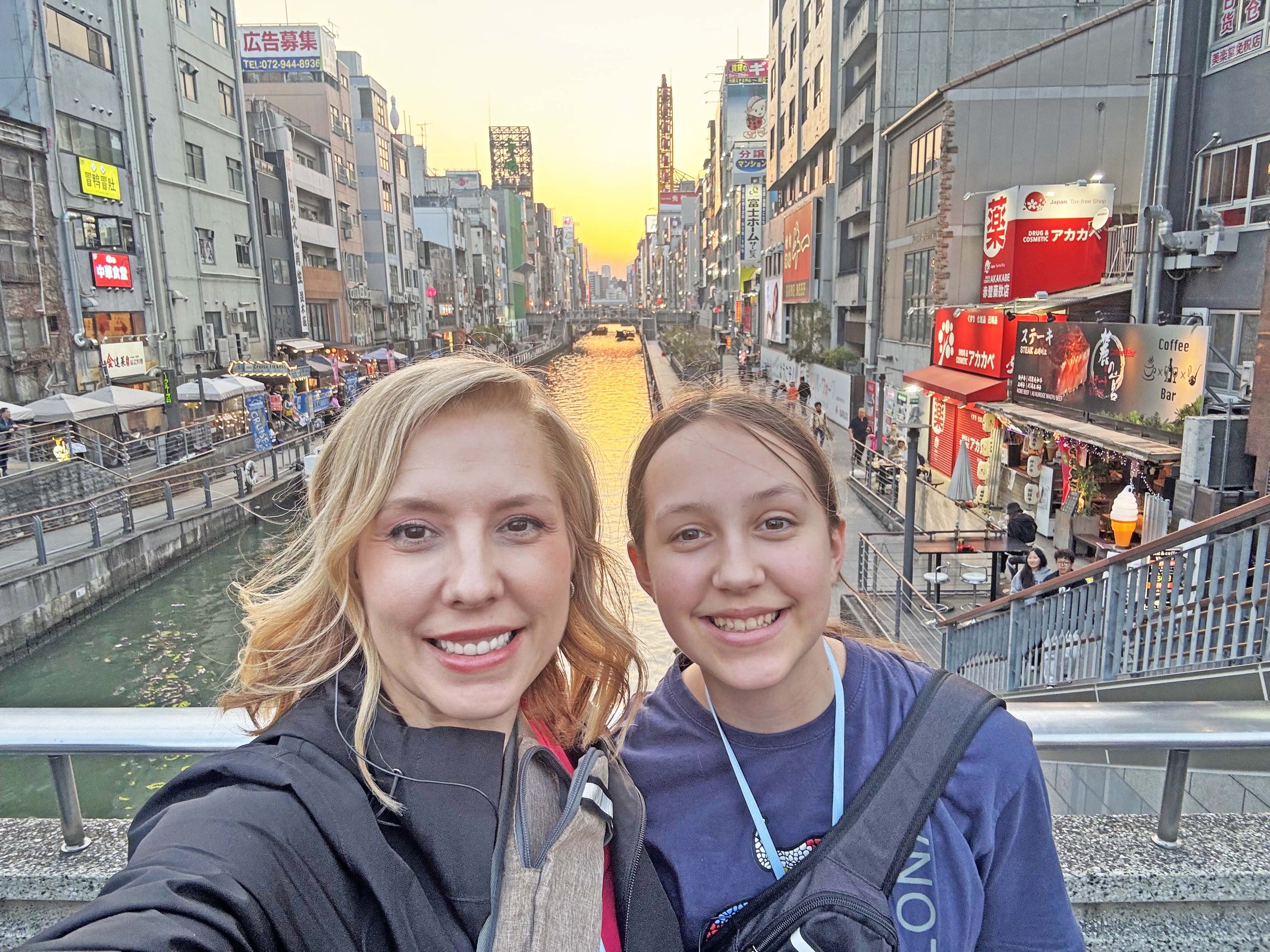
When Evan Skinner visited Japan recently during spring break, she was very impressed with how nice and welcoming the country’s people were.
Now, an eighth-grader at Platte Purchase Middle School, she joined several other students and parents, including her mom, Jennifer Skinner, on her recent trip to Japan.
Evan experienced many instances which made her feel welcomed by the Japanese people.
“When you would walk into a shop, even if they couldn’t speak English, they would gesture and try to help you find what you were looking for,” Evan said. “And at very big tourist attractions, most of the workers there could speak some English. And in very crowded areas, if you accidentally bump into someone, they would stop and apologize.”
The travel group got to visit many famous attractions, including: Arashiyama Bamboo Forest, Golden Pavilion Buddhist Temple, and Hamarikyu Japanese Gardens. They visited Osaka, Kyoto and Tokyo, among other cities. Highlights included a Sumida River cruise, Miraikan Science Museum, the Dog Cafe and karaoke.
One of the things that impressed Evan the most was how clean everything was in Japan, even though in most public bathrooms there was no soap.
“I don’t think I ever saw a single piece of trash on the ground. And the craziest thing is that there were zero trash cans,” Evan said. “We were questioning why there weren’t any trash cans, so we asked our tour guide, and in 1995, a group of terrorists put sarin gas in the Tokyo subway trash cans and after that, they decided to take out all trash cans so if you had trash you had to take it home with you and throw it away.”
Learning about Japan’s history was a highlight of the trip for the middle school students.
“Compared to the U.S., it’s very old; some of the buildings are from the 13th century,” Evan said. “Historically, there are two different religions: Shinto and Buddhism. A Shinto structure is called a shrine, and a Buddhist structure is called a temple. We learned that Japan has both an emperor and a prime minister; the emperor is the head of state, similar to a king, but the prime minister is the head of the government and has political power. We also learned about the Samurai warrior. There are no longer any working Samurai, but it is still thought to be a cultural icon in Japan.”
The Osaka Doutonbori district, which is a long street with lots of stores and street food was a favorite for Evan.
“The food was amazing. There was Tangulu, Gyoza, cheese-filled pancakes, squid, crab bites, and so much more. So many stores, so many people, it was so much fun, my mom and I had to go again the next day.”
While Evan believes that people could learn a lot about a foreign country without traveling abroad, she thinks that visiting the country and experiencing it first-hand are the best ways to learn about its culture and history.
“Japan was so cool, and everywhere we went, the tour guide would walk us through and explain the history of the attractions we explored,” Evan said. “Every so often, we would stop and take pictures, gather the group, or the tour guide would answer our questions (which we had many). We learned how they performed their prayers/rituals, how old every attraction was, the gods, and much more.”
Evan’s family sponsored a foreign exchange student from Spain a few years ago and she would like to visit the country in the near future, but she would also love to go back to Japan.
“Japan was the coolest place I’ve ever been to,” Evan said. “ I got to try new foods, sort of learn a new language, use different money, and experience another culture and activities. I love Japan. Japan was the best experience ever, so many things to see, and places to explore!”